Since 2026, ube has been widely talked up by the trade media as the "matcha successor": the next natural trend colour, the next wellness hype, the next cafe must-have. But is that actually true? Is the purple yam really the new matcha - or a trend in its own right that only happens to work in a similar way? We compare ube and matcha honestly along taste, colour, caffeine, nutrition and trend potential. (If you do not know ube yet, the best place to start is "What is ube?".)
Contents
Ube and Matcha at a Glance
At first glance ube and matcha seem related: both are naturally and vividly coloured, both stand for "mindful indulgence", and both go viral on social media. Yet in almost every concrete attribute they differ clearly.
| Attribute | Ube | Matcha |
|---|---|---|
| Origin | Philippines | Japan |
| Plant | purple yam root (Dioscorea alata) | finely ground green-tea leaves |
| Colour | naturally purple from anthocyanins | naturally green from chlorophyll |
| Taste | mildly sweet, vanilla-nutty | grassy, vegetal, umami |
| Caffeine | caffeine-free | high in caffeine |
| Preparation | powder in milk / baking / pureeing | whisked with water or milk |
| Typical products | ice cream, latte, cookies, chocolate, cake | latte, tea, ice cream, pastries |
| Price / availability | still niche, fast-growing | widely available, established |
| Trend status | on the rise (2026) | established, still strong |
Taste: The Biggest Difference
The most important difference is on the tongue. Ube tastes mildly sweet, vanilla-like and slightly nutty - often described as a cross between white chocolate, vanilla, pistachio and coconut. This flavour has broad appeal: it barely polarises and works across all age groups, from children to indulgence-minded adults.
Matcha is the flavour opposite. High-quality matcha tastes grassy, vegetal and umami, with a characteristic fine bitterness. It is exactly that bitterness that one half loves and the other rejects - matcha is a classic "love-it-or-hate-it" flavour. For retail this means ube has the lower barrier to entry, while matcha appeals to a loyal but more selective following.
Colour & Social Media
This is where ube and matcha are most alike: both deliver a natural, photogenic colour - and in the age of Instagram and TikTok that is worth real money. Matcha has its rich green from chlorophyll, ube its deep purple from anthocyanins. In both cases the colour is genuine, not artificially produced.
The difference: matcha green has been an established trend colour for years, whereas ube purple currently feels new and surprising - and new colours perform especially well in the feed. The hashtag #ube already counts over 120,000 posts on TikTok and more than 750,000 posts on Instagram. Purple is also statistically one of the highest-reach colours for food content, which helps explain the extra viral push.
Caffeine: Caffeine-Free vs. Wide Awake
One point that is often overlooked but decisive: ube is caffeine-free. As a yam root it naturally contains no caffeine at all - so an ube latte can easily be enjoyed in the afternoon or evening without disturbing sleep.
Matcha, by contrast, is a pick-me-up: the ground green tea delivers plenty of caffeine, combined with the amino acid L-theanine for an alertness often described as "calm and focused". So the two serve different occasions: matcha in the morning as an energiser, ube all day as pure indulgence. For that reason alone ube is not a direct one-to-one replacement for matcha - it does not replace the effect but fills a gap of its own.
Nutrition Compared
Both ingredients are happily marketed as "functional" - rightly so, but with different strengths in each case.
As a tuber, ube brings roughly 120 kcal per 100 g and scores above all with anthocyanins (over 300 mg/100 g), dietary fibre, vitamin C and potassium. Its low glycaemic index of around 24 makes the pure tuber comparatively blood-sugar-friendly.
Matcha, on the other hand, offers a different profile: a high level of antioxidants (especially catechins such as EGCG), the amino acid L-theanine and natural caffeine. Both are therefore "functional foods" in their own way - but they do not compete for the same benefit; rather, they complement each other.
Worth knowing
These figures refer to the pure tuber and the plain matcha powder respectively. Processed products such as ice cream, latte or chocolate contain additional sugar and fat depending on the recipe - the nutritional values are then declared per product.
Is Ube the New Matcha? Our Verdict
The honest answer is: partly yes, partly no - and that is precisely the point.
Yes, ube inherits the aesthetic role of matcha. It is the next natural, photogenic trend colour conquering the wellness and dessert segment and attracting on social media the attention matcha enjoyed for years. In that role, ube really is "the next big visual food trend".
No, ube does not replace matcha functionally. It is caffeine-free, tastes completely different and serves different occasions. Matcha remains the caffeinated tea ritual with its own loyal following. Instead of displacement, we see coexistence - two trends that meet different needs.
For retail, that is exactly the opportunity: ube is the chance to list the next viral wave early, without having to give up the established matcha business. Anyone who carries both covers the "awake" as well as the "indulgent" side of the trend.
Both trends in your range
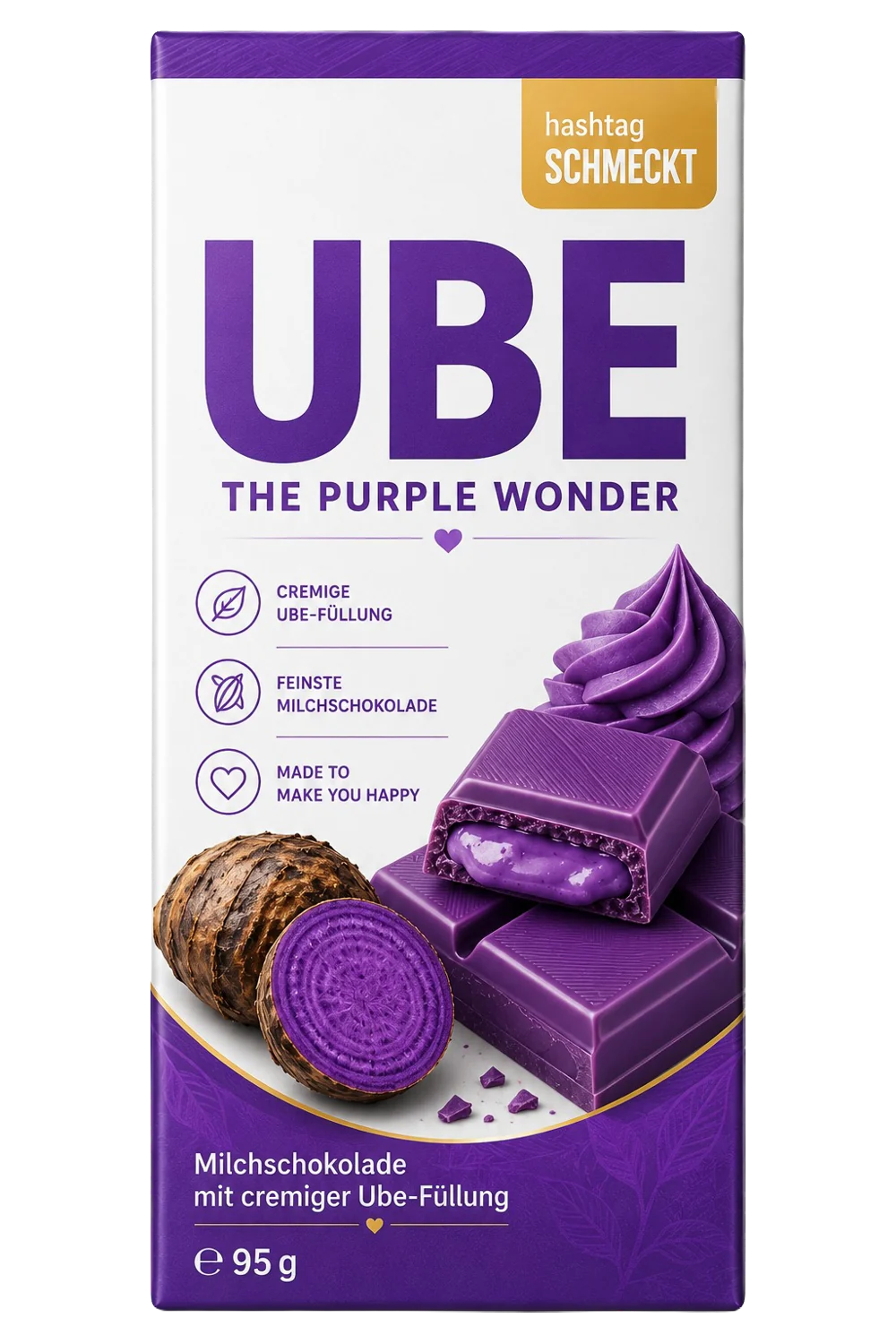
The good news for buyers: at VOVAN Global you do not have to choose. We offer both UBE - The Purple Wonder (cookies, chocolate, powder, donut) and our matcha-chocolate own brand Mytcha - ideal cross-listing potential to put the new purple wave and the proven matcha indulgence on one shelf.
Discover UBE - The Purple Wonder → Register as a Retailer