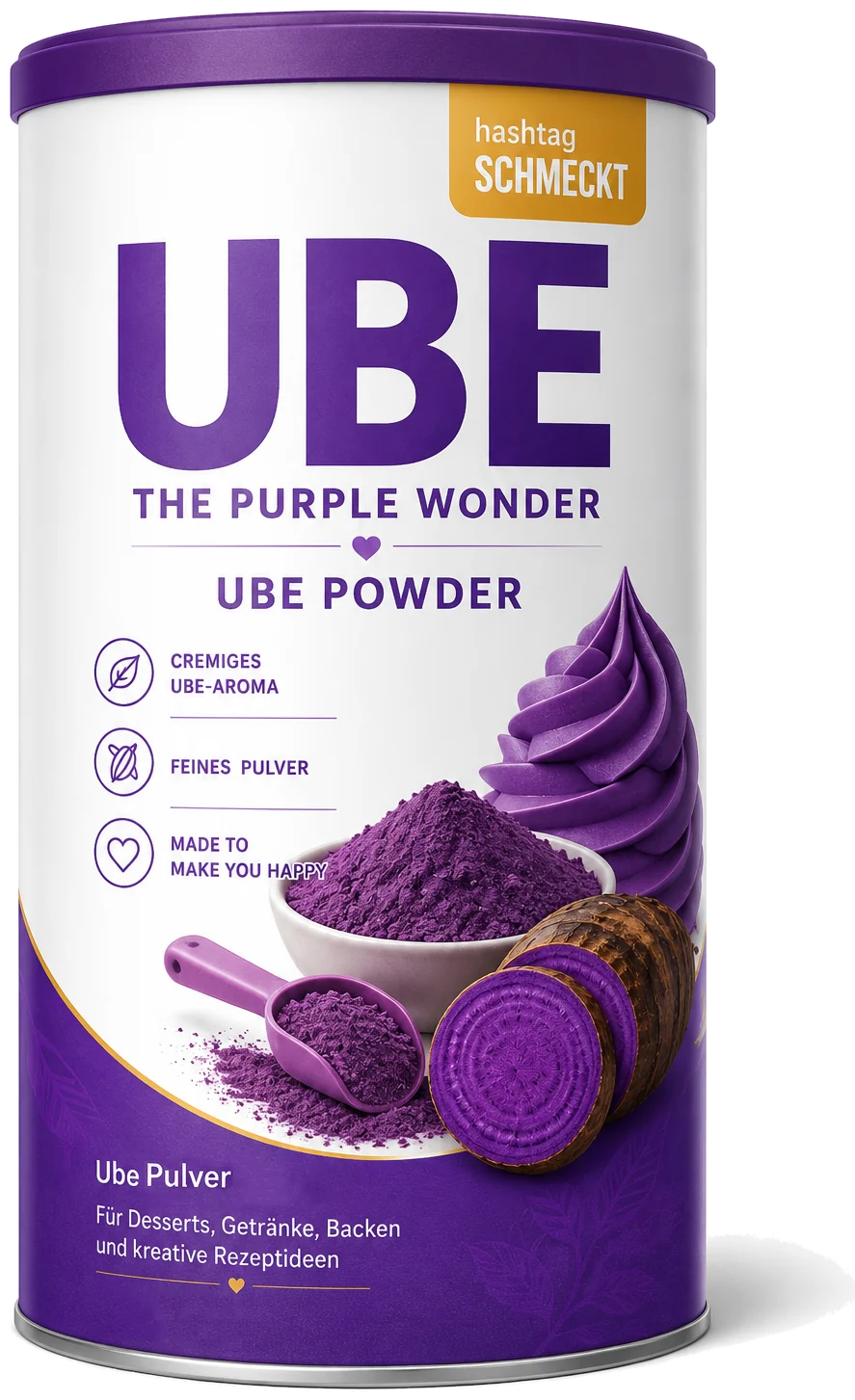
Ube (pronounced "OO-beh") is the purple yam from the Philippines - one of the biggest food trends of 2026. But what exactly is ube, what does it taste like, where does it come from, and how does it differ from taro and purple sweet potato? This guide answers all the key questions - clearly and concisely.
Contents
What is ube? The short answer
Ube is a purple yam, botanically Dioscorea alata. The tuber has intensely purple to pinkish-purple flesh and a mild-sweet, vanilla-nutty flavour. In its homeland, the Philippines, ube has been a fixture of dessert cuisine for centuries - from the ube jam "halaya" and ube ice cream to the purple-hued ube latte.
In English it is simply called the "purple yam". Importantly, ube is not an artificially coloured product - its colour is 100% natural.
What is ube in English?
The English word for ube is purple yam. "Ube" (also spelled ubi) is the Tagalog name of the tuber; in English-language cookbooks and shops it also appears as greater yam or water yam, and its botanical name is Dioscorea alata. So the classic Filipino dessert halayang ube translates to "purple yam jam" in English.
Because the Filipino word has travelled with the food trend, most cafes and brands worldwide now simply keep the original name "ube" - just like "matcha" or "kimchi".
How do you pronounce ube?
Ube is pronounced "OO-beh", roughly uh-beh (IPA: ˈuːbɛ). So not "yube" and not the English "yoob" either. The name comes from Filipino Tagalog. If you order ube at a cafe or shop, "OO-beh" is spot on.
What does ube taste like?
The flavour of ube is best described as mildly sweet, vanilla-like and slightly nutty - with a subtle caramel and coconut note. Many people compare ube to a cross between white chocolate, vanilla, pistachio and coconut.
Unlike matcha (bitter and grassy) or dark chocolate (sharp and bitter), ube is mild and barely polarising - a key reason why its flavour appeals to such a wide audience. Raw, ube tastes a little like a sweet sweet potato; only through processing (boiling, pureeing, adding condensed milk) does its signature dessert aroma develop.
Why is ube so vividly purple?
Ube's intense purple colour comes from anthocyanins - plant compounds that also give blueberries, aronia and elderberries their colour. Ube contains over 300 mg of anthocyanins per 100 g, more than most berries.
This is what makes ube so attractive: the purple is real, not from artificial dyes. It is precisely this natural vibrant colour that makes ube go so viral on Instagram and TikTok - purple is statistically one of the highest-reach colours for food content.
Origin & history
Ube originally comes from the Southeast Asian region and has been cultivated for centuries mainly in the Philippines. There the tuber is both a traditional staple food and the star of the dessert kitchen.
Its global rise began in 2016 in the United States, when Californian cafes and Trader Joe's introduced ube products. In 2024 the trend reached London, in 2025 Berlin cafes - and by 2026 ube has firmly arrived in the European mainstream. Trade media have since dubbed ube the "matcha successor".
Is ube healthy? Nutrition at a glance
The pure ube tuber is nutritionally quite interesting:
- Calories: approx. 120 kcal per 100 g (raw tuber)
- Fibre: rich in dietary fibre, good for digestion
- Vitamins & minerals: vitamin C, potassium, some vitamin A
- Antioxidants: over 300 mg of anthocyanins per 100 g
- Glycaemic index: approx. 24 - low, so comparatively blood-sugar-friendly
Good to know
These values apply to the pure ube tuber. Processed ube products such as ice cream, cake or chocolate contain additional sugar and fat depending on the recipe - their nutritional values are then declared per product.
Ube vs. taro vs. purple sweet potato
Three tubers are constantly confused. Here is the clear difference:
| Feature | Ube | Taro | Purple sweet potato |
|---|---|---|---|
| Botanical | Dioscorea alata (yam) | Colocasia esculenta | Ipomoea batatas |
| Flesh | intensely purple | white to light pink | purple-bluish |
| Taste | sweet, vanilla, nutty | mild, earthy, slightly nutty | potato-like, mildly sweet |
| Uses | desserts, sweet dishes | savoury & sweet | savoury & sweet |
In short: only ube delivers the full "Purple Wonder" experience - vivid purple plus a sweet, vanilla-like dessert flavour. More on this in the detailed comparison Ube vs. Taro.
How is ube used?
Ube is extremely versatile - almost always in the sweet realm. The classic applications:
- Ube halaya - the traditional Filipino ube jam made from boiled, pureed tuber with coconut cream and sugar
- Ube ice cream - one of the most popular ube products worldwide
- Ube latte - the purple-hued, caffeine-free trend drink (often made from ube powder); see our guide on how to make an ube latte
- Ube cake & crinkles - from bibingka to purple cookies
- Ube mochi & pandesal - patisserie and bakery applications
- Ube chocolate, cookies & donuts - ready-made snacks for retail and foodservice
You will find concrete step-by-step instructions in our guide Ube Recipes: Halaya, Latte, Crinkles & Ice Cream.
Where can you buy ube?
Depending on your needs, there are several sources:
- Fresh ube tuber: in well-stocked Asian grocery stores (often imported frozen)
- Ube powder & extract: online and in specialty bake shops - ideal for latte, baking and ice cream
- Ube halaya (jam): in Filipino grocery stores
- Ready-made ube snacks: cookies, chocolate, donuts - the fastest-growing segment
Ube for the trade: B2B wholesale
Are you a buyer in grocery retail, foodservice or convenience and want to list ube products? With UBE - The Purple Wonder, VOVAN Global offers ready-made ube snacks - cookies, chocolate, powder and donut - in B2B wholesale for DACH and the EU. More at vovanglobal.de/en/ube.
Frequently asked questions about ube
What is ube in English?
Ube is simply called the "purple yam" in English. Botanically it is Dioscorea alata.
What does ube taste like?
Mildly sweet, vanilla-like and slightly nutty - often described as a mix of white chocolate, vanilla, pistachio and coconut.
Is ube the same as taro?
No. Ube is a yam (Dioscorea alata) with purple flesh and a sweet flavour. Taro (Colocasia esculenta) has white flesh and tastes mildly earthy.
Is ube healthy?
The pure tuber has approx. 120 kcal/100 g, plenty of fibre, vitamin C, potassium and over 300 mg of anthocyanins/100 g, with a low glycaemic index (approx. 24).
Where can I buy ube?
Fresh ube in Asian grocery stores, powder and extract online. For the trade, VOVAN Global offers ready-made ube snacks in B2B wholesale.
Discover UBE - The Purple Wonder → Become a retailer