Ube and taro are constantly confused - and there is a simple reason for it: many taro products, above all taro bubble tea, are dyed a vivid purple and therefore look exactly like ube. In reality, however, they are two completely different tubers from two different plants. In this comparison we clarify the difference in color, taste, plant and uses - and answer the question of which of the two is really naturally purple. If you are first wondering more generally "What is ube?", it is best to read our ube guide first.
Contents
Are ube and taro the same? The key difference
No, ube and taro are not the same: ube is naturally purple and sweet; taro is naturally white to pale pink and mild-earthy. That is the heart of the matter. Ube (botanically Dioscorea alata) is a true yam with intensely purple flesh and a dessert-like, vanilla-nutty flavour. Taro (Colocasia esculenta) belongs to a completely different plant family, has cream-white to pale pink flesh and tastes mild and slightly earthy - and is eaten both savoury and sweet.
What is taro, exactly?
Taro is the starchy corm of the plant Colocasia esculenta from the aroid family - one of the oldest cultivated crops in the world. Its flesh is cream-white to pale pink and its taste is mild, nutty and slightly earthy, somewhere between potato and chestnut. Across Asia, Oceania and Africa taro is a staple food: boiled, fried, as chips - or pureed in the famous taro bubble tea.
Important: raw taro is not edible because of its calcium-oxalate crystals and must always be cooked. And the purple colour people expect? In drinks and desserts it almost always comes from food colouring - or from ube.
Ube vs. taro: the comparison table
Here are all the key features side by side at a glance:
| Feature | Ube | Taro |
|---|---|---|
| Botanical name | Dioscorea alata | Colocasia esculenta |
| Plant family | Yam (true yams) | Aroid (arum family) |
| Flesh color | intense purple | white to pale pink, often with purple specks |
| Taste | sweet, vanilla, nutty | mild, earthy, slightly nutty |
| Uses | almost only desserts & sweets | savoury AND sweet |
| Region | Philippines | widespread across Asia & the Pacific |
Why is my taro bubble tea purple?
This is the most common source of confusion. Anyone who has had a vividly violet taro bubble tea in front of them understandably assumes that taro is purple. But real taro is not vividly purple - the flesh is cream-white to pale violet, at most shot through with fine purple specks.
The strong color in many taro drinks comes from two sources: from food colouring or from an ube addition that gives the drink its appetising look. In other words: if your "taro" drink is bright purple, it usually owes that color not to the taro but to artificial dyes or a shot of ube. This is exactly where the mix-up arises - many people associate the rich purple with taro, even though it is actually the hallmark of ube.
Taste: sweet-vanilla vs. earthy
There are worlds between the two tubers in taste as well. Ube tastes mildly sweet, vanilla-like and nutty - often described as a cross between white chocolate, vanilla, pistachio and coconut. This makes ube almost perfect for desserts and sweet drinks, without much added sweetening.
Taro, by contrast, is far more restrained: mild, slightly earthy and only subtly nutty - closer in flavour to a potato or chestnut than to a dessert. That is precisely why taro is so versatile: it works in savoury curries and soups just as well as in sweetened applications, where the sugar is only added during preparation. Ube brings the sweetness with it by nature; taro does not.
Can you swap ube and taro?
Only to a very limited extent. In sweet recipes - for example in a cake, a cream or a latte - ube and taro can be swapped at a pinch, but the result changes noticeably: with ube everything turns vividly purple and much sweeter, with taro it stays pale and you have to add sweetness.
In savoury dishes, however, the swap barely works - ube is simply too sweet to replace taro in a curry or a soup. Our recommendation: if you are after the purple dessert experience - the vivid color plus the vanilla-sweet flavour - reach straight for ube. If you need a mild, neutral starch base for savoury or lightly sweetened dishes, taro is the right choice.
Real ube for your business
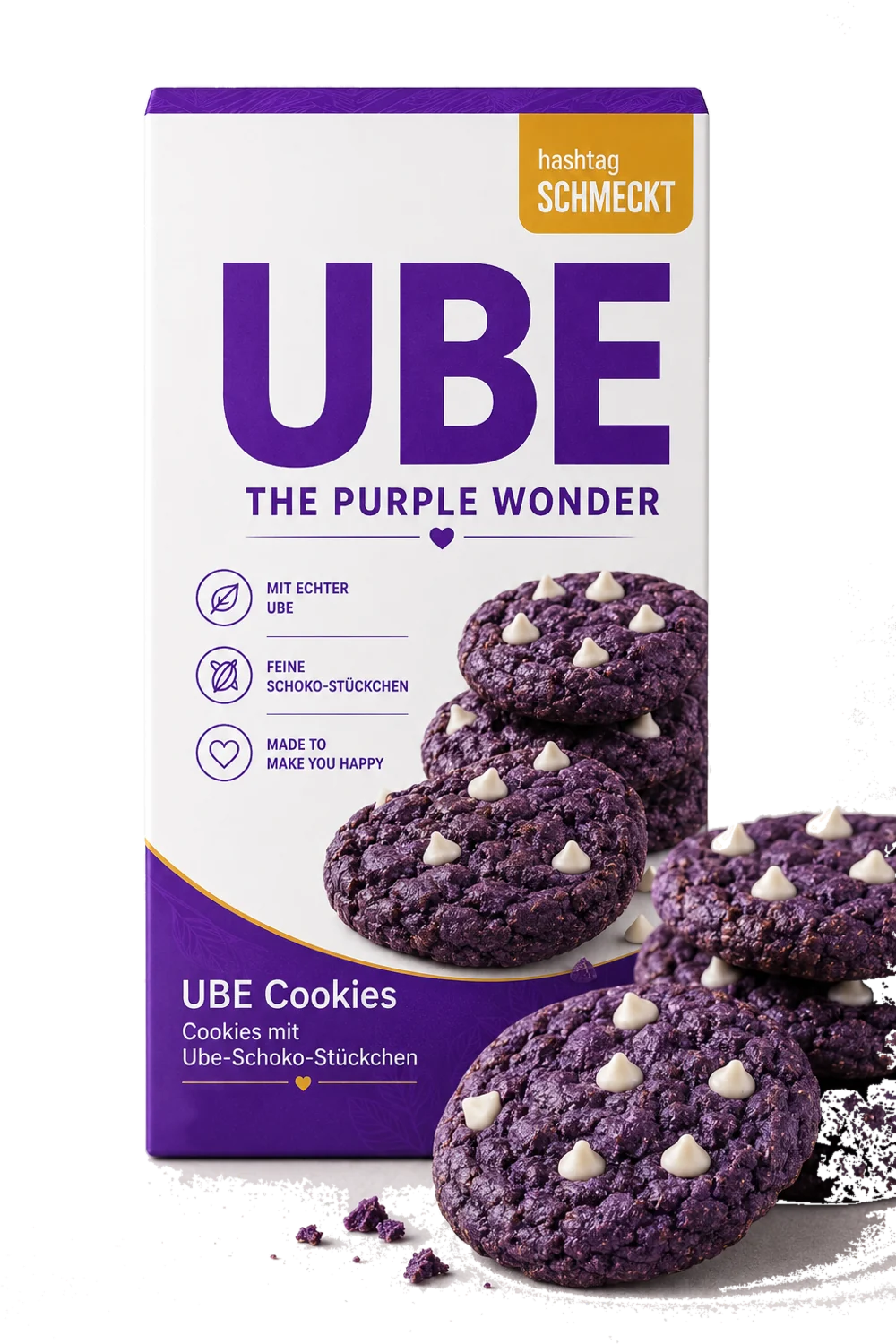
If you want natural ube color and real ube flavour - without artificial dye or a taro compromise - VOVAN Global offers ready-made ube products under the own brand UBE - The Purple Wonder: cookies, chocolate, powder and donut in B2B wholesale for DACH and the EU. More at vovanglobal.de/en/ube.
Discover UBE - The Purple Wonder → Register as a Retailer
Frequently asked questions about ube and taro
Is ube the same as taro?
No. Ube is a yam (Dioscorea alata) with naturally purple flesh and a sweet-vanilla flavour. Taro (Colocasia esculenta) is an aroid with white to pale pink flesh and a mild, earthy flavour - two completely different tubers.
Which is purple - ube or taro?
Only ube is naturally vivid purple (over 300 mg of anthocyanins per 100 g). Taro is white to pale pink, often with fine purple specks. Vividly purple taro products are usually dyed or mixed with ube.
Does taro taste like ube?
No. Ube tastes sweet, vanilla-like and nutty - almost like a dessert. Taro tastes mild, slightly earthy and only subtly nutty, and is also used savoury.
Is taro bubble tea made from ube?
Usually not. Classic taro bubble tea is made from taro. The vivid purple colour, however, often comes from food colouring or an ube addition - real taro is more cream-white to pale violet.
Can you substitute taro for ube?
In sweet recipes, to a degree - the result turns purple and sweeter. In savoury dishes not, because ube is too sweet. For the purple dessert experience, use ube directly.